
Covid is growing milder with time but an occasional surge in cases is expected because the virus that causes it is now endemic and constantly evolving, say scientists while assuring that there is no cause for concern.

"Provide enough infrastructure and money to carry out surveillance and set up a robust routine surveillance machinery for the country to monitor any and every infectious disease'

'These number surges will be the outcome of emerging virus variants, loss of vaccine- or infection-acquired protective immunity in people, and environmental factors'
'...but subjecting our heritage to rigorous evidence-based understanding.'
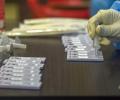
'There are not enough RT-PCR tests and they take a long time to do in specialised centres. So the world is using RA tests for the same reason that India is using them, and with similar somewhat spuriously comforting rationale'

The assurance comes as India's Covid graph dips -- on Friday 1,109 new coronavirus infections were reported -- and also one case of a new Covid strain in Mumbai.

Modi spoke to the BJP's longest serving president, who is credited with crafting the party's rise through the 90s when it came to power for the first time as the head of coalition governments under Atal Bihari Vajpayee, and congratulated him.
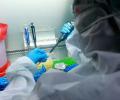
Doses of the vaccine were given to 1,077 healthy adults aged between 18 and 55 in five United Kingdom hospitals in April and May as part of the phase one clinical trial.
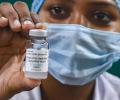
The decline in the effectiveness of Covaxin, India's indigenous COVID-19 vaccine, from 77.8 per cent to 50 per cent during a Delta-driven case surge in April and May this year is neither bad nor surprising, say scientists.

India has purchased 500 million doses of the Oxford University-AstraZeneca vaccine candidate, one billion from the United States company Novavax and 100 million doses of the Sputnik V candidate from Russia's Gamaleya Research Institute, according to the US-based Duke University Global Health Innovation Center.
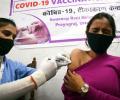
'Scientific data has proven that masks can reduce COVID-91 transmission by 53 per cent...A booster dose of vaccine, even if it works, is just a temporary fix'

As worries over India's COVID-19 spike mount -- the country added 75,809 cases on Tuesday to take its tally to 42,80,422 -- scientists are grappling with the pivotal issue of antibodies and trying to understand how they impact on the progression of the disease.

The expert noted that in India the pandemic is unlikely to be over in the months to come, and the number of people getting infected will continue to rise.

The researchers, including those from the Centre for DNA Fingerprinting and Diagnostics (CDFD) in Hyderabad, advise testing asymptomatic primary and secondary contacts followed by surveillance.
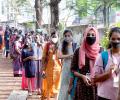
While there is a glimmer of hope and India's COVID-19 numbers are on a definite decline for a combination of reasons, a vaccination programme continues to be important, particularly given the presence of a mutant, more transmissible strain, several experts said while cautioning against infection upticks ahead.
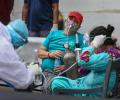
As the Omicron strain spreads across the globe and questions on vaccine inequity dominate discussions, scientists are still scrambling to learn more about emerging variants of the deadly virus that has claimed millions of lives and crippled economies.

The Omicron variant carries 'concerning' mutations that may make it more transmissible and allow it to evade immunity, scientists said on Monday, stressing that the one certainty in the uncertainty of the many things unknown is this -- COVID is not a short-term crisis and vaccines are still a critical tool.

Scientists around the world, including in India, suggest it hasn't been tested properly given the time constraint and there may not be enough evidence to prove its efficacy.

As the global debate on booster shots gathers momentum, several scientists in New Delhi said the priority must be to ensure that more people are inoculated with at least their first jab.
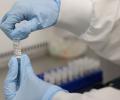
According to the World Health Organisation, 10 candidate vaccines for COVID-19 are in the clinical evaluation and 126 are in the pre-clinical stage.

'We must not compromise with the standard, the quality. We don't need to be the first to launch a drug but what we need is a Made in India vaccine that the entire world can rely on'
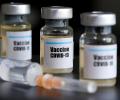
Some vaccine frontrunners are in advanced stages of trial and could hit the market by early next year, making the task of securing "last mile connectivity" and ensuring that nothing goes wrong before the shot is administered more urgent.
